
In 2026, EDGG will organise two Field Workshops: the 22nd EDGG Field Workshop, focused on the dry grasslands of North-Eastern Poland, will take place on 24–30 May 2026; and the 23rd EDGG Field Workshop, to be held in the Pirin Mountains (Bulgaria) on 14–18 July 2026, will focus on all open habitats of the subalpine and alpine belts. For details on the 22nd Field Workshop in Poland, see the dedicated page.
23rd EDGG Field Workshop in the Pirin Mountains (14−18 July 2026)
The 23rd EDGG Field Workshop will be conducted in the Pirin Mountains (Pirin National Park), SW Bulgaria, in the period 14−18th July. This research expedition continues the series of EDGG Field Workshops. It will take place immediately prior to the 21st Eurasian Grassland Conference. The Field Workshop will start in Sofia on 14th July and finish on the evening before the conference starts, making it possible for people to participate in both events.
In the tradition of the EDGG Field Workshops, this event will be devoted to the sampling of high-quality multi-scale and multi-taxon data on vegetation diversity (Dengler et al. 2016, 2021). While the majority of previous EDGG Field Workshops, including the 3rd EDGG Field Workshop in Bulgaria (Pedashenko et al. 2013; Dembicz et al. 2021), focused on dry grasslands (Festuco-Brometea, Koelerio-Corynephoretea, Sedo-Scleranthetea), we have now widened the scope to all natural and semi-natural non-forest habitats in the Palaearctic (see e.g. Dengler et al. 2020; Skobel et al. 2026).
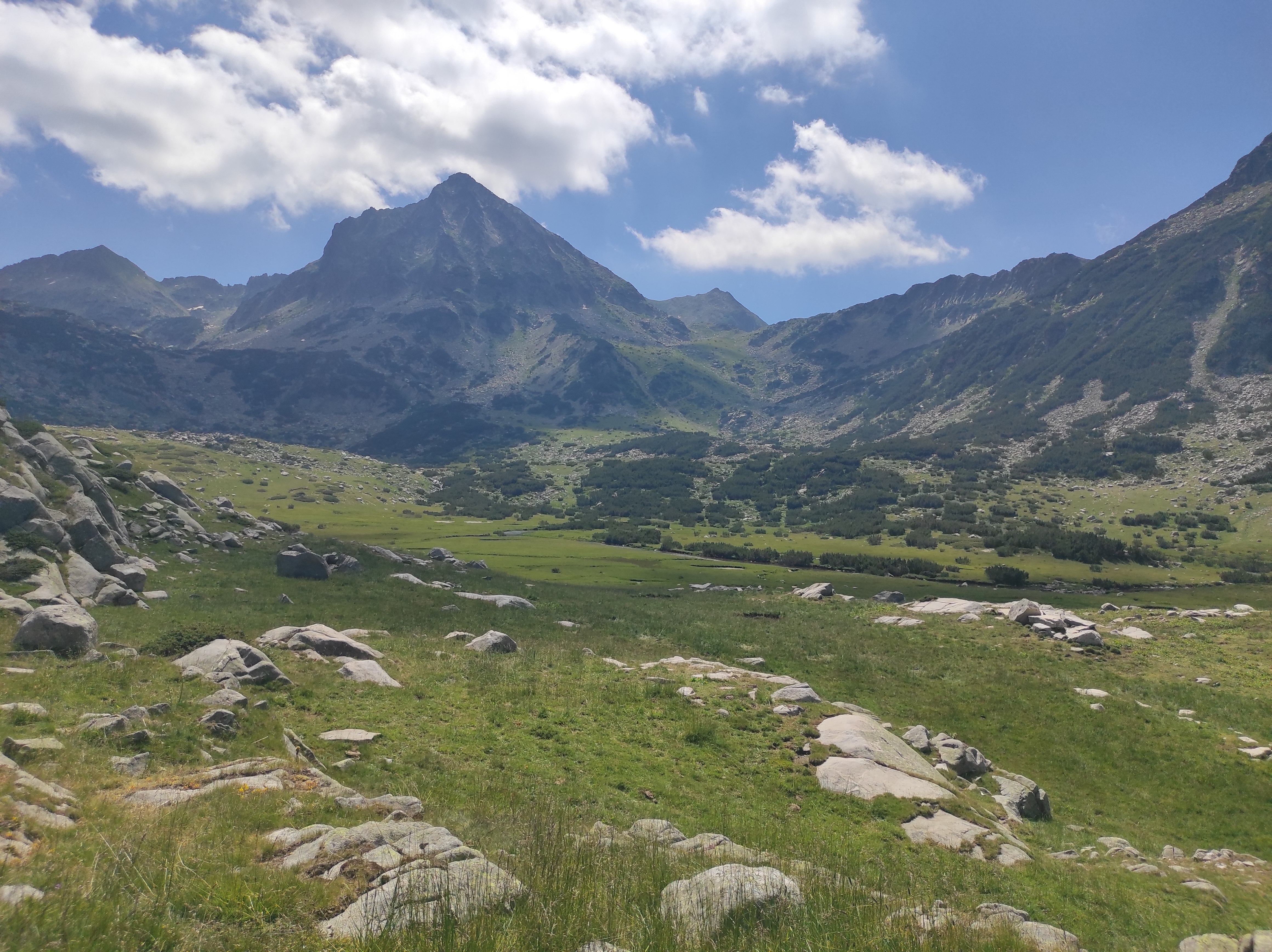
Subalpine belts of the Pirin Mountains. Photo: K. Vassilev.
Our sampling in the Pirin Mountains will primarily focus on subalpine and alpine grassland habitats on both acidic and base-rich bedrock, but may also extend to other open habitats, such as heathlands, screes, mires, or tall-forb communities, as was done during the two recent Swiss alpine Field Workshops (Dengler et al. 2020). As usual, we will sample not only vascular plants, but also bryophytes, lichenised fungi and soils, using the multi-scale approach of EDGG (Dengler et al. 2016).
The Field Workshop is open to all vegetation ecologists (Bachelor students to professors), who have good species knowledge and are interested in collaborative high-quality sampling. The generated data will be used for joint publications and contributed to the GrassPlot database (Dengler et al. 2018; Biurrun et al. 2021).
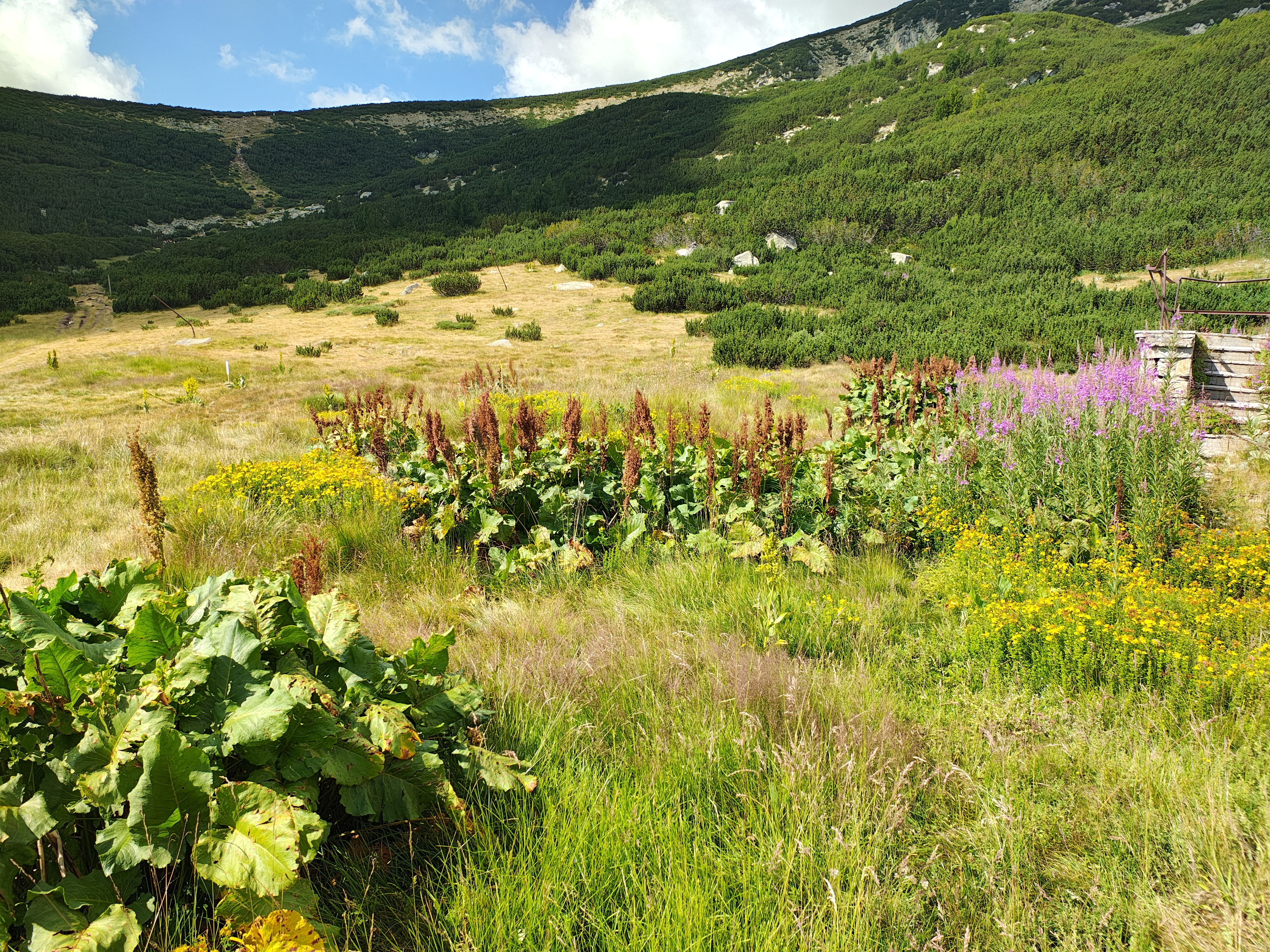
View of the Bezbog Hut region with habitat 6150 Siliceous alpine and boreal grasslands (foreground) and habitat 4070 * Bushes with Pinus mugo (background). Photo: N. Velev.
Study area
Our study area is the Pirin Mountains and specifically the Pirin National Park, which covers a significant part of the mountain range. The Pirin National Park was established in 1962 and comprises 404 km². On its territory, there are two Nature Reserves (“Bayuvi Dupki - Dzhindzheritsa” and “Yulen”). The territory is characterized by high habitat diversity and is part of the Natura 2000 network in Bulgaria (BG0000209 Pirin).
Two regions are scheduled to be visited - the region of the Vihren Peak (2000-2800 m a.s.l.) and the region of the Bezbog Peak (2200-2600 m a.s.l.). The Vihren Peak is the highest peak of the Pirin Mt. at 2914 m a.s.l. The average annual rainfall is 1150 mm, and the snow cover reaches up to 3 m. The annual absolute minimum temperature goes down to -25°C, while the maximum temperature reaches 23°C. The region is dry because the peak is marble, which does not retain water.

View of the Vihren region. Photo: N. Velev.
The Pirin Mountains have a very high floristic diversity. There are 1341 species of vascular plants (approx. 1/3 of the Bulgarian flora), 330 bryophytes, 424 lichenised fungi, 376 other macro-fungi, and several hundred species of algae. The flora of the Pirin Mountains is characterized by a high percentage of endemic species. It includes 17 locally endemic plants that are found only on this massif, 36 Bulgarian, and 110 Balkan endemics. Among the local endemics are Papaver degenii, Oxytropis urumovii, O. kozhucharovii, Brassica jordanoffii, Arenaria pirinica, Erigeron vichrensis, Verbascum davidoffii, Rhinanthus javorkae, Thymus perinicus. Along the road to Vihren Hut, the oldest conifer tree in Bulgaria can be seen - a specimen of Pinus heldreichii. Its age is estimated at more than 1300 years, and it has impressive dimensions - height 26 m, diameter 2.48 m, and circumference 7.80 m.
The sampling sites will include the following habitat types: 4060 Alpine and Boreal heaths, 4070* Bushes with Pinus mugo, 6150 Siliceous alpine and boreal grasslands, 6170 Alpine and subalpine calcareous grasslands, 6230* Species-rich Nardus grasslands, on siliceous substrates in mountain areas, 62D0 Oro-Moesian acidophilous grasslands.
The vegetation of the targeted areas is related to the classes Loiseleurio procumbentis-Vaccinietea, Roso pendulinae-Pinetea mugo, Juncetea trifidi, Elyno-Seslerietea, and Nardetea strictae.
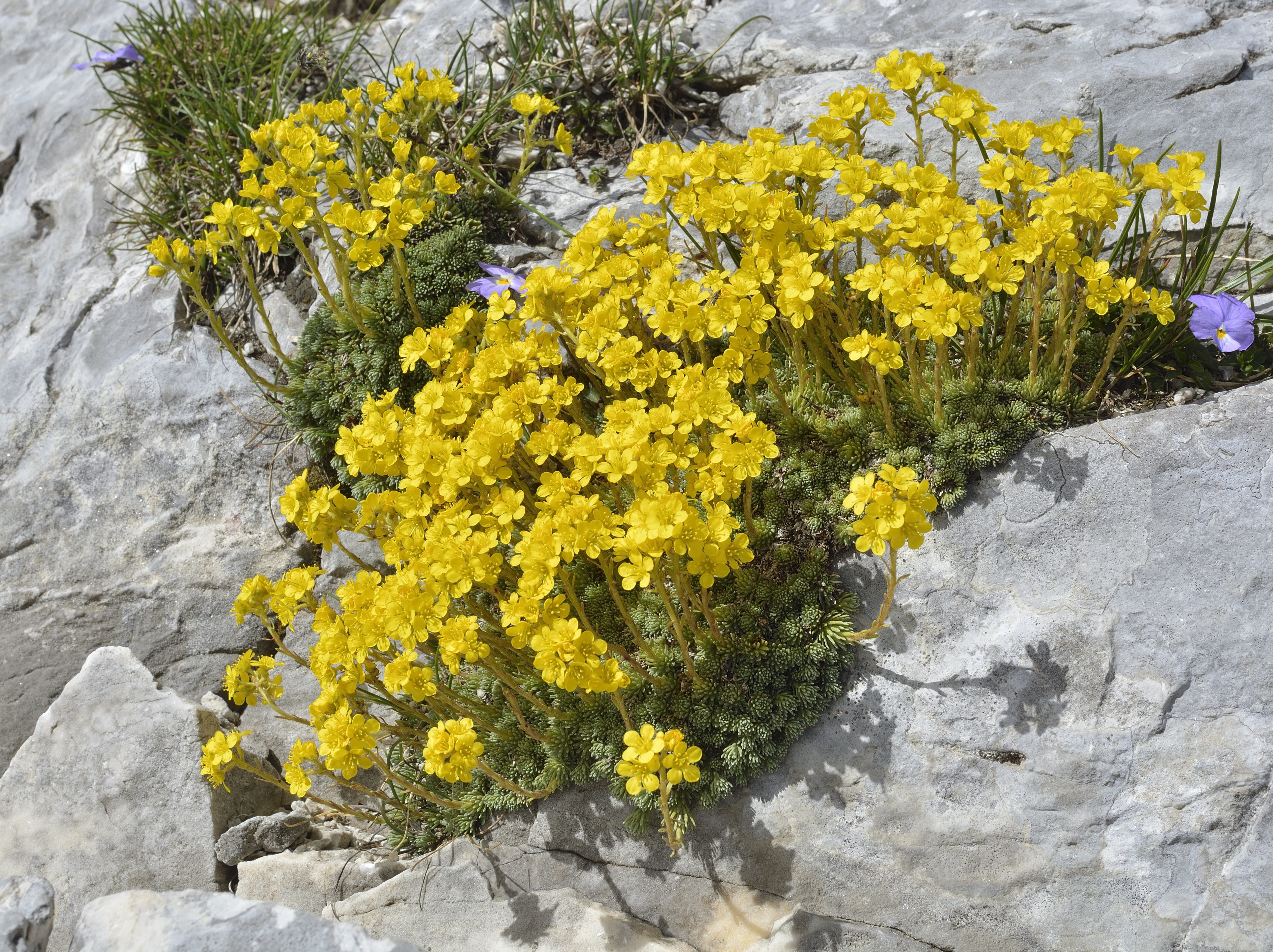
Saxifraga ferdinandi-coburgi. Photo: S. Stoyanov.
Short itinerary of the Field Workshop
The approximate sampling locations are shown in the figure below.
- Day 1: 14 July
Meeting in Sofia, transfer and accommodation in Bansko town. Joint sampling with introduction of the EDGG Biodiversity Plots sampling methodology on the territory of Pirin National Park (Denys Vynokurov & Jürgen Dengler). - Day 2: 15 July
Sampling in the area around Vihren Hut (silicate substrate). - Day 3: 16 July
Sampling in the area below Vihren Peak (calcareous substrate) and Banderitsa Hut. - Day 4: 17 July
Sampling in the area around Bezbog Hut and Bezbog Peak (silicate substrate). - Day 5: 18 July
Sampling in the area around Bezbog Hut (silicate substrate).
Accommodation & travelling
We will stay at the family hotel Chichin in the town of Bansko for the whole period.
The Field Workshop will start in Sofia, Bulgaria, at 8:00 on 14th July 2026. The exact meeting location will be provided to registered participants closer to the start of the event. The Field Workshop will end in Sofia at 20:00 on 18 July 2026.
Participation in the Field Workshop is limited to 20 participants in addition to the organisers. Participants are expected to contribute actively to the success of the collaborative work, both during and after the Field Workshop, by helping with identification of vascular plants, bryophytes and lichens, analyses of soil samples, data digitisation and statistical analyses.
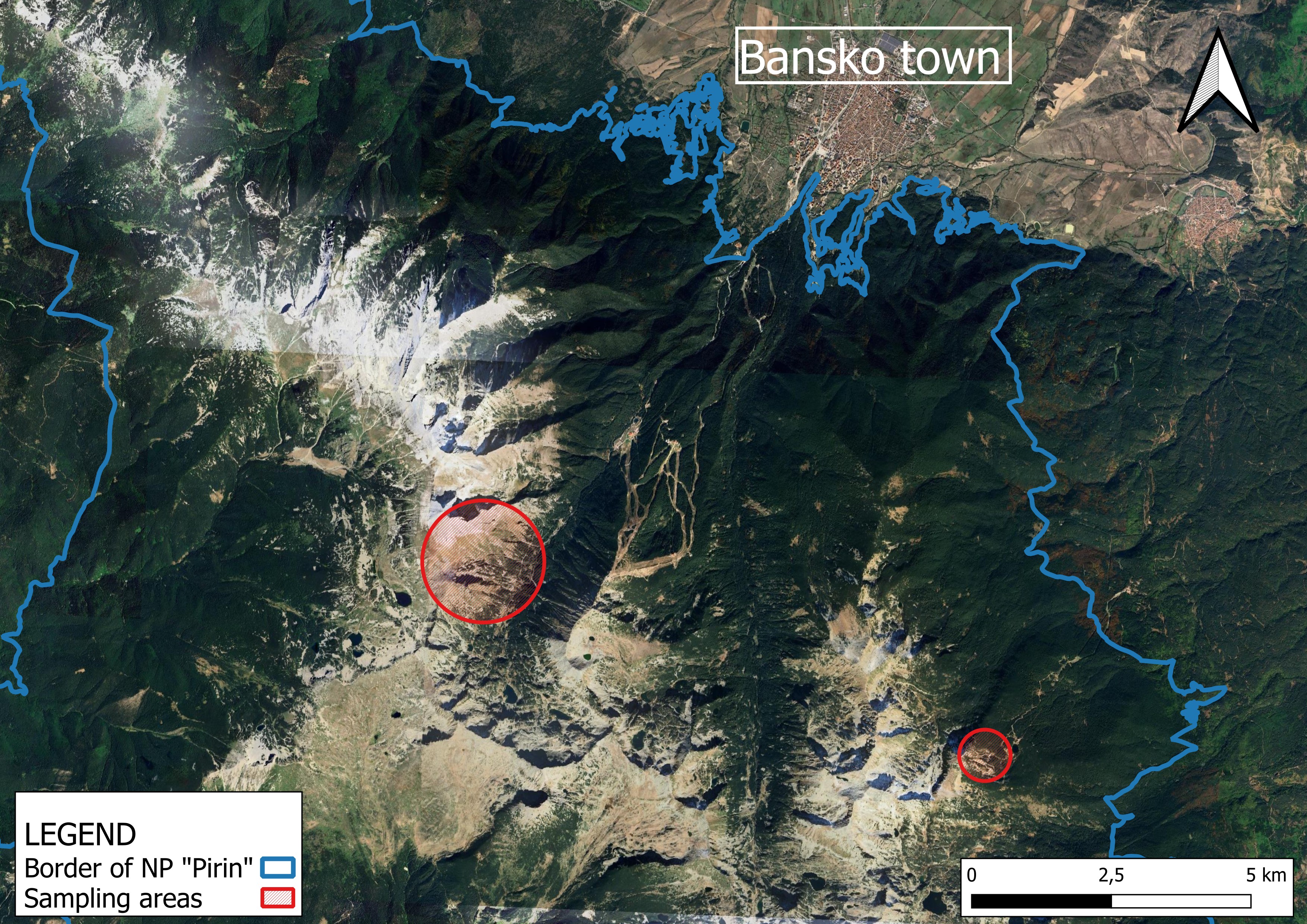
Sampling areas on the territory of the Pirin National Park.
Registration & Fees
The registration for the 23rd EDGG Field Workshop (FW) will be held together with the registration to the 21st Eurasian Grassland Conference (EGC). To apply for participation in the Field Workshop, please fill in the following online form until 15th April. Those who have not participated in at least three previous Field Workshops are expected to provide a short motivation letter. If the number of applications exceeds the number of available places, participants will be selected based on their motivation letters and the competencies they offer. Preference will be given to those who are able to identify bryophytes and lichens or analyse the collected soils, or are willing to host one of the next Field Workshops.
The fees for the 23rd EDGG Field Workshop cover all costs for transfers, food and accommodation, starting at 8:00 on 14 July and ending at 20:00 on 18 July (both in Sofia). The fees are as follows:
- 350 € for students (including PhD students) who are IAVS members
- 450 € for postdocs, senior scientists, or other participants who are IAVS members
- 450 € for students (including PhD students) who are not IAVS members
- 550 € for postdocs, senior scientists, or other participants who are not IAVS members
Payment for the Field Workshop must be made by 15th June 2026.
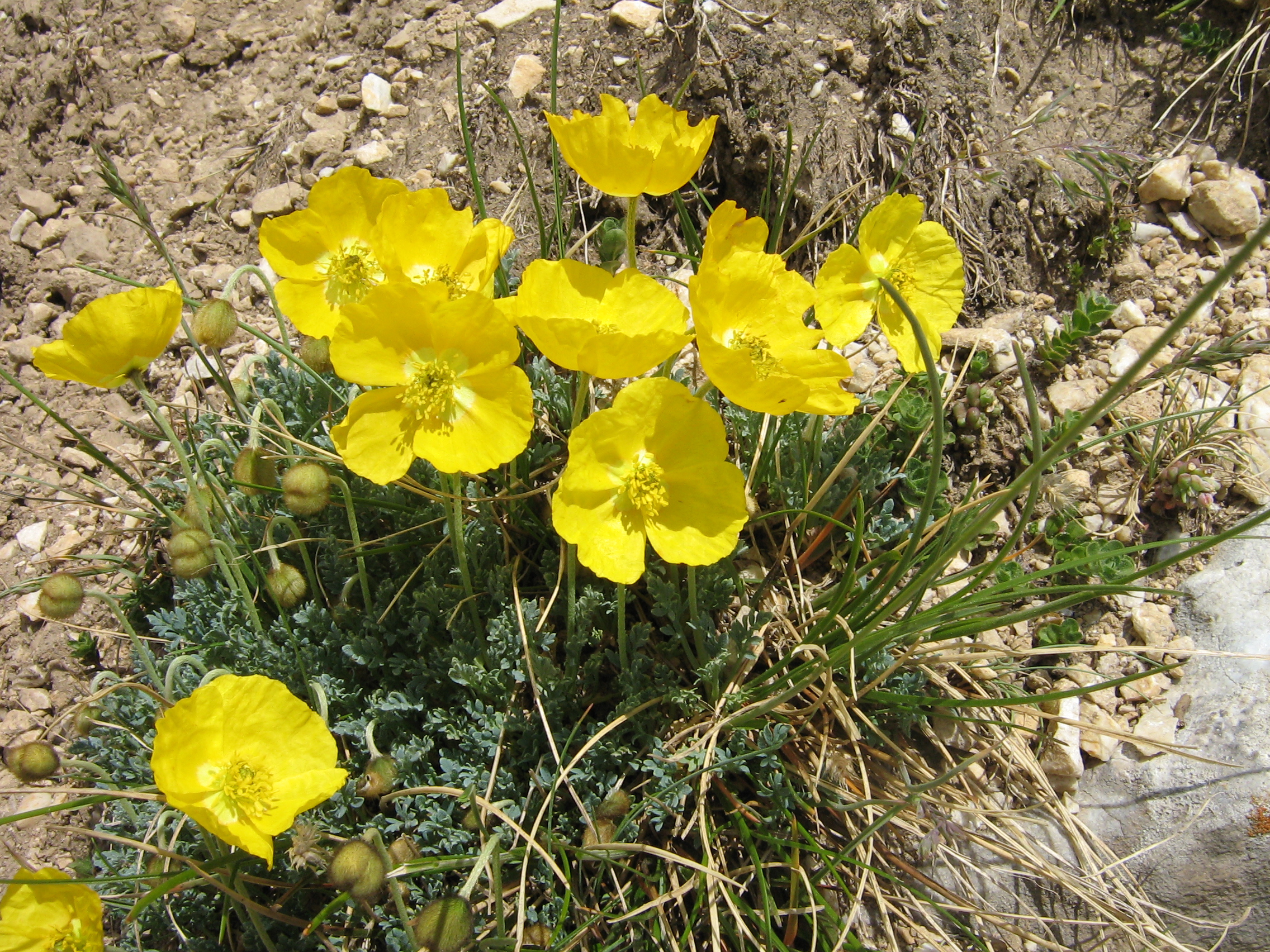
Local endemic species Papaver degenii. Photo: S. Stoyanov.
References
Biurrun, I., Pielech, R., Dembicz, I., Gillet, F., Kozub, L., Marcenò, C., Reitalu, T., Van Meerbeek, K., Guarino, R., (…) & Dengler, J. (2021) Benchmarking plant diversity of Palaearctic grasslands and other open habitats. Journal of Vegetation Science 32: e13050.
Dembicz, I., Velev, N., Boch, S., Janišová, M., Palpurina, S., Pedashenko, H., Vassilev, K. & Dengler, J. 2021. Drivers of plant diversity in Bulgarian dry grasslands vary across spatial scales and functional-taxonomic groups. Journal of Vegetation Science 32: e12935.
Dengler, J., Boch, S., Filibeck, G., Chiarucci, A., Dembicz, I., Guarino, R., Henneberg, B., Janišová, M., Marcenò, C., (…) & Biurrun, I. 2016. Assessing plant diversity and composition in grasslands across spatial scales: the standardised EDGG sampling methodology. Bulletin of the Eurasian Dry Grassland Group 32: 13−30.
Dengler, J., Wagner, V., Dembicz, I., García-Mijangos, I., Naqinezhad, A., Boch, S., Chiarucci, A., Conradi, T., Filibeck, G., (…) & Biurrun, I. 2018. GrassPlot – a database of multi-scale plant diversity in Palaearctic grasslands. Phytocoenologia 48: 331–347.
Dengler, J., Cykowska-Marzencka, B., Bruderer, T., Dolnik, C., Neumann, P., Riedel, S., Seiler, H., Zhang, J. & Dembicz, I. 2020. Sampling multi-scale and multi-taxon plant diversity data in the subalpine and alpine habitats of Switzerland: Report on the 14th EDGG Field Workshop. Palaearctic Grasslands 47: 14–42.
Dengler, J., Biurrun, I. & Dembicz, I. 2021. Standardised EDGG methodology for sampling grassland diversity: second amendment. Palaearctic Grasslands 49: 22–26.
Pedashenko, H., Apostolova, I., Boch, S., Ganeva, A., Janišová, M., Sopotlieva, D., Todorova, S., Ünal, A., Vassilev, K., Velev, N. & Dengler, J. 2013. Dry grasslands of NW Bulgarian mountains: first insights into diversity, ecology and syntaxonomy. Tuexenia 33: 309–346.
Skobel, N., Ahola, A., Borovyk, D., Fahs, N., Isocrono, D., Miskova, O., Mussaari, M., Nikolei, R., Rabyk, I., (…) & Dengler, J. (2026) Vegetation of open habitats in the Turku Archipelago (Finland): the GrassPlot dataset Fl_A sampled during the 21st EDGG Field Workshop. Palaearctic Grasslands 66.
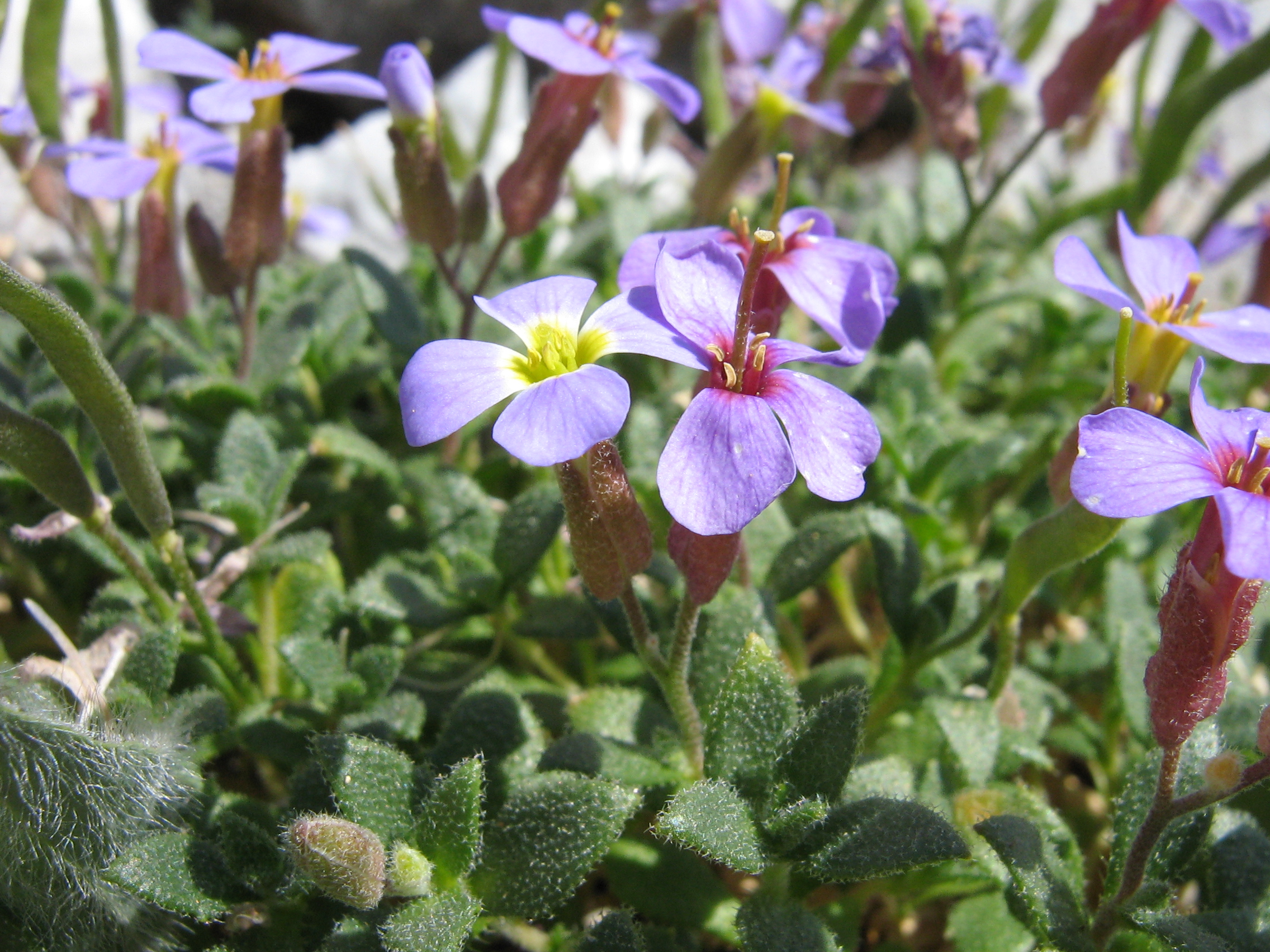
Aubrieta gracilis. Photo: S. Stoyanov